Career paths · 5 min read
Driver jobs in Kenya: licence, PSV and application checks
Match a driving vacancy to your licence, vehicle experience and work arrangements, with official NTSA links and a practical application checklist.
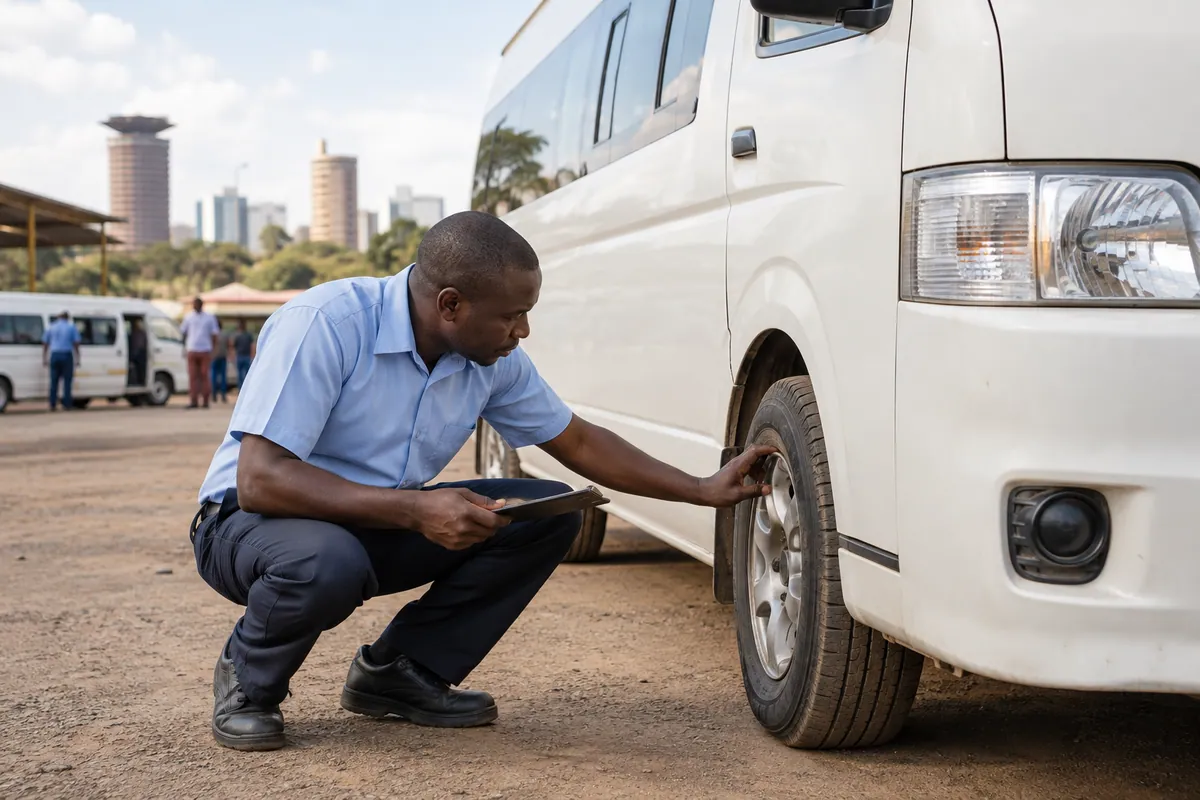
A driver job can mean passenger transport, deliveries, an office vehicle, a heavy commercial vehicle or field travel. Those roles are not interchangeable. Read the vehicle and duties first, then check your licence, relevant experience and any additional authorisation named in the advert.
Start with the vehicle and the work
Record the vehicle type, routes, duty station and passenger or cargo responsibilities. A company-driver role in Nairobi can involve a different schedule from an NGO field role or a long-distance delivery job. Check whether the employer supplies the vehicle or expects you to provide one.
Look for the required licence class, experience period and any first-aid, defensive-driving or mechanical-knowledge requirement. These should come from the actual advert. Do not assume a general driving licence meets every commercial or passenger-service requirement.
Verify licence and PSV requirements through NTSA
NTSA’s official service portal provides driver testing and licensing and public-service transport services. Use that route to check the service relevant to your circumstances. If a vacancy requires PSV documentation, establish the exact requirement before paying for an application or training.
Read the live service instructions for eligibility, documents, fees and renewal. A screenshot of an old fee or a promise of an instant badge is not enough. This guide does not assign you a licence class or confirm that you qualify for a regulated service; the vehicle, your licence record and NTSA’s current rules determine the answer.
Build a driving CV with useful evidence
State the licence classes you actually hold and the relevant vehicle types you have driven. Describe genuine duties such as pre-trip checks, maintaining a journey record, planning routes, reporting faults or handling delivery documentation. If an advert asks for a specific certificate, name its issuer and accurate date.
Use measured records only when you have them. Do not claim an invented accident-free mileage total or an endorsement you cannot demonstrate. Explain your role accurately if the driving was part-time, for a family business or alongside another job.
Completed pre-trip checks, recorded fuel purchases against journey logs and reported vehicle faults to the fleet supervisor before the next assignment.
Check the practical assessment
A verified employer may specify a driving or practical assessment. Confirm the venue, vehicle type, contact person and documents to bring through the employer’s official route. Do not surrender an original identity document to an unidentified intermediary as a condition of learning where the interview is.
Prepare to explain what you would do when a vehicle develops a fault, a route becomes unsafe or a passenger asks you to break procedure. Clear escalation and reliable records can matter as much as familiarity with a route.
Clarify pay and costs before accepting
- Basic or consolidated pay, payment frequency and employment or contractor status.
- Normal hours, rest arrangements, overtime and overnight trips.
- Who pays fuel, maintenance, parking and other approved work expenses.
- How subsistence and accommodation on authorised travel are handled.
- Vehicle custody, reporting procedures and the named supervisor.
Submit to the original advert
Keep the job reference, deadline and submitted CV. If police clearance or another document is requested, use the official issuing process and the employer’s stated submission stage. A recruiter’s promise to arrange a job in exchange for a personal payment should be independently checked.
Use the driver-pay guide on Work.ke for dated examples and the difference between a wage-order minimum and a county salary scale. For the actual offer, keep the vehicle category, place of work and applicable employment terms attached to the number.
Use a vehicle-specific application example
A useful experience statement names the vehicle class, type of duty and the responsibility you actually held. For example, describe planned deliveries, passenger movement or equipment transport, together with logbooks, route planning and vehicle checks where these were part of your work. Keep claims measurable and honest; do not claim accident-free mileage or technical qualifications you cannot substantiate.
Before accepting an assessment or starting work, ask who provides the vehicle and fuel, where the test takes place and whether any travel cost falls on you. At offer stage, separate ordinary driving duties from loading, cash collection, vehicle maintenance and overnight travel. Those details affect the job even when two employers use the same driver title. Compare the vehicle category and industry with the relevant wage table rather than applying one driver minimum to every role.
Sources and further reading
Explore this topic
Driver jobs in Kenya · Pay tables and calculations · More guides in this topic
Frequently asked questions
Does every driver role require PSV authorisation?
The requirements depend on the vehicle and work. Read the advert and verify the applicable licence or authorisation through NTSA.
Can I apply with a different licence class?
Compare your valid licence with the vehicle class required. Ask the employer to clarify an ambiguous advert rather than claiming an authorisation you do not hold.
Is a driver salary figure normally net pay?
Not necessarily. The figure may be basic, gross or a statutory minimum. Ask for the pay basis and deductions.
Do agricultural drivers use the same minimum-wage table?
Agricultural industry employment has a separate schedule. Check that schedule and the exact occupation instead of automatically using the General Order.
What should I keep after applying?
Keep the advert, vacancy reference, submitted CV and acknowledgement. Preserve written information about the assessment location and contact person.